Your facility has 200 cameras. Your control room has three operators. At any given moment, each operator is responsible for monitoring over 60 live feeds simultaneously. The truth is, most incidents are not caught in real time. They are discovered hours later, during manual playback, after the damage is already done. If this sounds familiar, the problem is not your camera infrastructure. It is the gap between recording footage and actually acting on it.
This blog explains how AI-powered video surveillance bridges that gap, turning passive camera networks into real-time detection and response systems across smart cities, highways, industrial facilities, and high-security premises.
Most organizations have invested heavily in CCTV infrastructure over the past decade. According to a MarketsandMarkets report, the global AI in video surveillance market is projected to grow from USD 3.90 billion in 2024 to USD 12.46 billion by 2030, at a CAGR of 21.3%. This growth is not driven by organizations installing more cameras. It is driven by the realization that cameras alone do not prevent incidents.
Traditional surveillance operates on a record-and-review model. Footage is captured, stored and only examined after an event is reported. In practice, this means a perimeter breach at a factory goes unnoticed until the next shift. A stalled vehicle on a highway creates a pileup before anyone reviews the feed. An unauthorized person enters a restricted zone and exits before a single alert is generated.
The fundamental limitation is human bandwidth. Operators cannot sustain focused attention across dozens of screens for hours. Critical events get missed not because of equipment failure, but because the system was never designed to detect them proactively.
AI-powered video analytics solves this by replacing human-dependent monitoring with automated, real-time detection. Instead of waiting for an operator to spot an anomaly, the system identifies it autonomously and triggers an instant alert.
Here is what this looks like across real-world deployment scenarios:
For industrial facilities, corporate campuses, and defence installations, perimeter breaches are among the most critical security events. AI video analytics continuously monitors defined zones and detects the moment a person or object crosses a virtual boundary.
For highway operators and traffic management authorities, the consequences of delayed incident detection are measured in lives. A stalled vehicle in a high-speed lane, a wrong-way driver entering an expressway, smoke from a vehicle fire, or sudden fog reducing visibility to near zero, all of these require immediate response.
AI-driven video incident detection systems monitor highway corridors continuously, identifying anomalies like accidents, fallen objects, stopped vehicles, and fire or smoke in real time. Alerts are transmitted directly to the traffic management control centre, enabling coordinated response through variable message signs, emergency dispatch, and lane closures. This approach has become a core component of India’s expressway monitoring infrastructure, including deployments on projects like the Purvanchal Expressway, Dwarka Expressway, Belngulur – Mysuru Highway, Amritsar Jamnagar Expressway etc.
For smart city authorities managing public gatherings, religious festivals, or transit hubs, overcrowding is a safety risk that escalates rapidly. AI-powered video analytics can estimate crowd density in real time, identify when a zone is approaching unsafe occupancy levels, and trigger alerts before a stampede or crush scenario develops.
This capability has been operationalized at large-scale public events in India, where ICCCs set up across all 100 Smart Cities serve as the centralized nerve centres for real-time monitoring and response coordination. Video analytics feeds into these command centres alongside traffic, emergency, and public infrastructure data, creating a unified situational awareness picture.
Beyond real-time detection, AI-powered surveillance introduces a second critical capability: the ability to compress hours of footage into actionable summaries. Video summarization technology allows investigators to review an entire day’s footage from a camera in minutes instead of hours, automatically surfacing the segments that contain activity or anomalies.
For law enforcement teams running investigations through command centres, this transforms forensic review from a resource-draining exercise into a focused, efficient process. Instead of assigning officers to manually scrub through footage, the system highlights the relevant events and filters out dead time.
When combined with facial recognition, this creates a layered intelligence framework. The system can identify persons of interest in real time across a camera network, flag repeat visitors to sensitive zones, and generate movement trails without any manual intervention.
If you are building internal justification for upgrading from passive CCTV to an AI-powered platform, here are the capabilities that separate proven deployments from vendor demos:
Edge-Based Processing: The AI should run at the camera or local server level, not depend entirely on cloud processing. Edge deployment ensures sub-second alerting even with limited bandwidth, which is essential for highway and remote site deployments.
Multi-Use Case Flexibility: A single platform should support intrusion detection, crowd analytics, vehicle tracking, fire and smoke detection, facial recognition, and traffic incident detection without requiring separate software stacks for each.
Integration With Command Centres: The platform must feed directly into ICCCs or centralized control rooms, supporting real-time dashboards, alert routing, and incident management workflows.
Scalability Across Camera Networks: Whether you are starting with 50 cameras at one facility or scaling to thousands across a city, the architecture should support multi-location deployment with centralized monitoring and remote diagnostics.
The shift from passive monitoring to proactive security is not a technology upgrade. It is an operational transformation. Organizations that make this shift report faster incident response, reduced security staffing pressure, and measurable improvements in threat prevention.
Vehant Technologies, incubated at IIT Delhi with over 20 years in AI-driven security and surveillance, delivers this through the OKEAN AI platform, a real-time video analytics solution deployed across smart cities, highways, industrial facilities, and aviation infrastructure nationwide. From perimeter intrusion to crowd safety to highway incident detection, OKEAN converts existing camera networks into proactive intelligence systems.
The cameras are already in place. The question is whether they are watching, or thinking.
How does AI-powered video surveillance differ from traditional CCTV?
Traditional CCTV records footage for later review. AI-powered surveillance analyzes video in real time, detecting anomalies like intrusions, overcrowding, or incidents and triggering instant automated alerts.
What types of incidents can AI video analytics detect automatically?
AI video analytics detects perimeter intrusions, fire and smoke, stalled or wrong-way vehicles, overcrowding, unauthorized access, loitering, fallen objects on highways in real time and many more depending on the requirement of the customer.
Can AI surveillance systems integrate with smart city command centres?
Yes. AI-powered platforms feed real-time alerts and video streams into Integrated Command and Control Centres (ICCCs), enabling centralized monitoring across traffic, safety, and emergency response systems.
Is edge-based AI processing necessary for video surveillance?
Edge-based processing runs AI at the camera level, ensuring sub-second alerting without relying on cloud bandwidth. This is critical for highways, remote sites, and large-scale deployments.
How does video summarization help security teams?
Video summarization uses AI to compress hours of footage into short activity-focused summaries, enabling investigators to review a full day’s footage in minutes instead of manually scrubbing recordings.


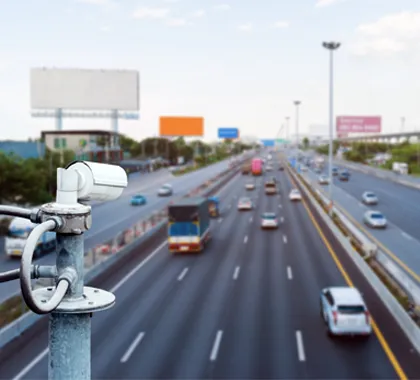
If you are managing traffic enforcement for a smart city project or overseeing vehicle access at a high-security facility, you already know that manual surveillance does not scale. Registers get...
read more

Deep tech innovation now serves as the primary technological foundation that supports modern infrastructure development, with multiple advanced technologies, such as artificial intelligence (AI), intelligent surveillance systems, automation technologies, and...
read more

Today numerous cities in India are rapidly moving towards a future that is smart and urbanized. The only mission these cities have is to make use of technology in a...
read more
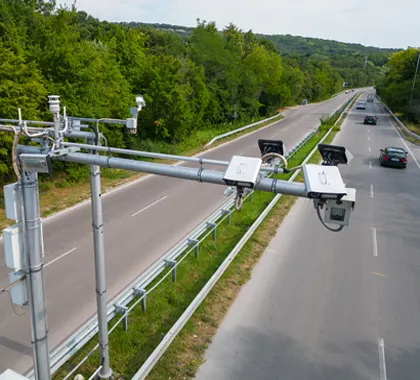
Speeding remains one of the most persistent threats on modern roads. It shortens reaction time, extends braking distance, and turns routine commutes into serious crashes. As cities grow denser and...
read more

 +91-120-4610200
 contact@vehant.com